Most Lagos homes already spend enough on diesel and NEPA to pay for a solar system. They just spend it a month at a time, on power they will never own. Here is what that power costs today, what a system costs to buy, and how long it takes to pay for itself.
What does electricity really cost in Lagos?
Between ₦366 and ₦625 per kWh for most homes and businesses, once grid and generator are counted together. Band A grid power is cheap at ₦210 per kWh. The problem is the hours it doesn’t arrive, which a generator fills at about ₦640 per kWh in diesel alone, and about ₦730 once servicing, overhaul and stolen fuel are counted. The more of your power comes from the generator, the more you pay.
| Customer | Share from the grid | Blended cost per kWh |
|---|---|---|
| Band A home, evening-weighted load | 70% | ₦366 |
| Band B/C small business | 42% | ₦531 |
| Band C/D commercial, daytime load | 25% | ₦625 |
The full arithmetic, including why an oversized generator costs more per kWh, is in solar vs generator in Lagos.
How much does a solar system cost in Lagos?
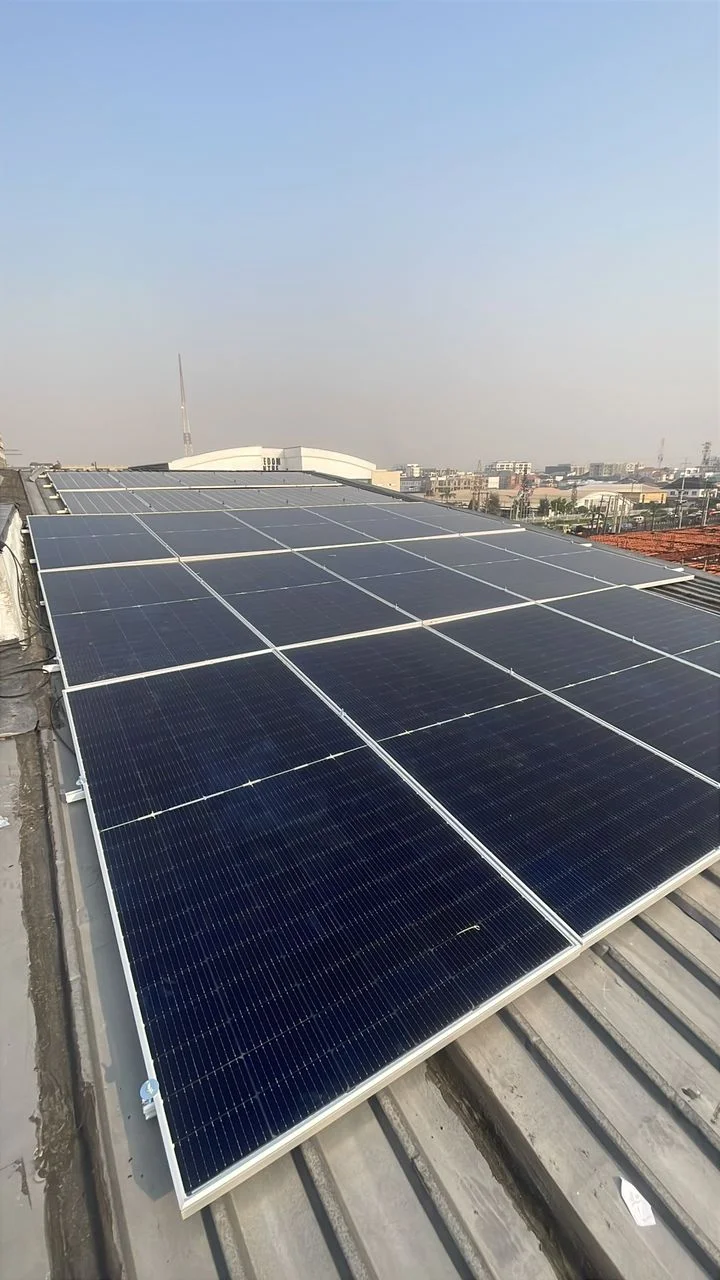
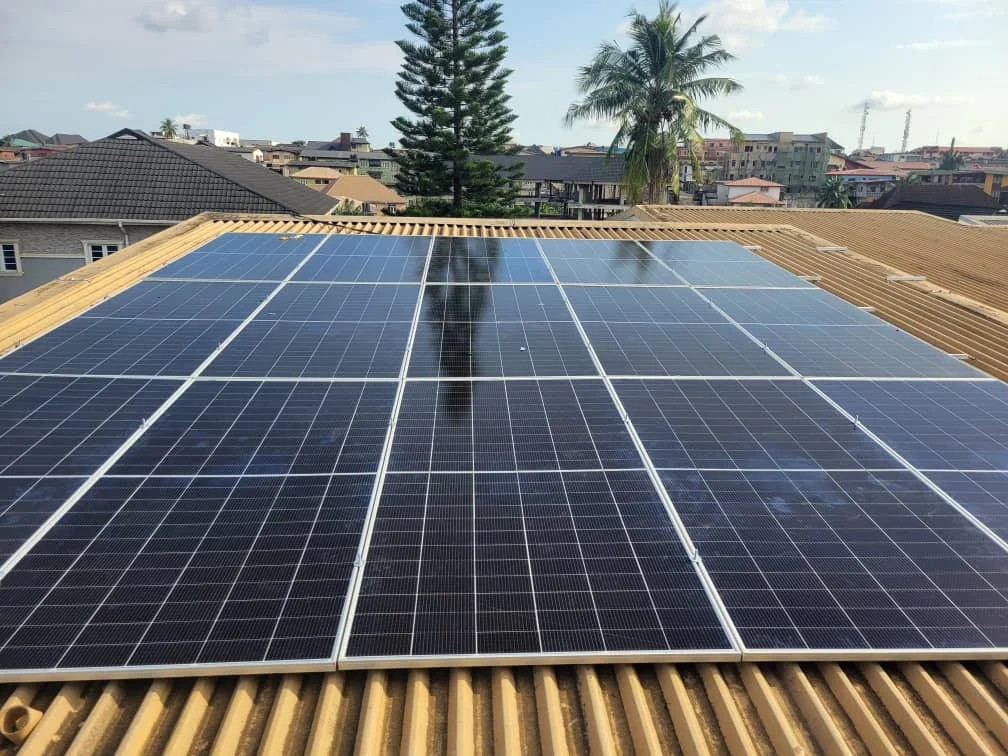
From ₦3.9M installed for a 6kVA home system, to ₦16.8M for an 18kVA one, as of October 2026. Every price includes Jinko 620W panels, the inverter, LiFePO₄ lithium battery, mounting, cabling, protection, installation and remote monitoring. Each size comes in a full version and a cheaper one with less battery or fewer panels, which you can add to later.
| System | Installed price | Air conditioners | Payback |
|---|---|---|---|
| 6.2kVA · 3.7kWp · 10kWh | ₦3.9M–₦5M | 1 unit (1.5HP) | 2.1–3.5 years |
| 6kVA · 5kWp · 15kWh | ₦5.3M–₦6.1M | 1 unit (1.5HP) continuously, or 2 units alternating | 1.9–3.2 years |
| 10kVA · 9.9kWp · 30kWh | ₦8.6M–₦10.9M | 2 units (1.5HP) together | 1.7–2.9 years |
| 11kVA · 8.7kWp · 30kWh | ₦6.9M–₦9.8M | 2 units (1.5HP) together, a third in sunshine hours | 1.7–3 years |
| 12kVA · 11.2kWp · 30kWh | ₦9.1M–₦11.5M | 2–3 units (1.5HP) together | 1.6–2.7 years |
| 18kVA · 18.6kWp · 30kWh | ₦13.6M–₦16.8M | 4 units (1.5HP) together in the day, 2 at night | 1.4–2.4 years |
Bigger sites run 24 to 72kVA business systems; they are all on the packages page. If you’d rather start from your monthly bill than from a system, the solar calculator works backwards from what you spend.
How long does solar take to pay for itself?
Around two to three years for a home, less for a business. The smallest home system saves about ₦169,000 a month against the generator and grid it replaces, and pays back in 2.1–3.5 years. The larger home systems pay back a little faster, in 1.4–2.4 years for the 18kVA. Solepower quotes 1.5 to 3.5 years publicly because it would rather promise less than the model shows.
After that the savings keep coming. At today’s prices, before diesel rises again, the Solepower Home 6 Budget saves around ₦20.3M over ten years, and the Solepower Home 18 around ₦102.1M.
What if I can’t pay it all upfront?
Lease-to-own takes 30–40% down and the balance over 3, 6 or 12 monthly payments, and the system is yours at the end. On the ₦3.9M system, 30% down is ₦1,174,000, then 12 payments of about ₦275,000, or 3 of about ₦968,000. The financing page shows every plan for every system.
Businesses with daytime load can also take Energy as a Service: no upfront cost, a monthly fee of 50–60% of what you spend on power now, on a seven-year contract with Solepower owning and maintaining the system.
How long does the equipment last?
- Panels: 25 to 30 years. Tier-1 panels such as the Jinko Tiger Neo carry a 30-year power warranty and still make over 80% of their rated output at the end of it.
- Lithium batteries: about 10 years. The packs we fit are rated for 6,000 cycles or more, one a day for 16 years on paper, but heat and age wear a battery out before its cycles run out, so we plan on 10.
- Inverters: 5 to 10 years with routine care, and the part most likely to be replaced once during the panels’ life.
Note: the payback figures assume your generator was doing real work. A home that gets 20 hours of Band A power and rarely starts its generator saves less, and should size a smaller system around its outages rather than its whole load.