
Starter
Solepower Business 60 Starter
₦47,525,000.00
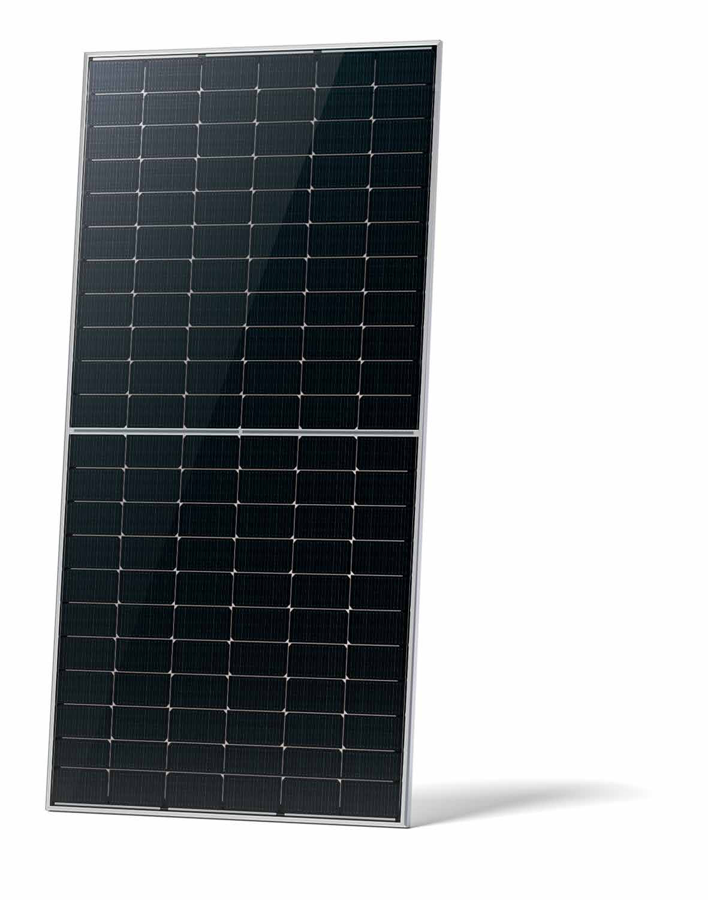
- 49.6 kWp solar · 80 panels
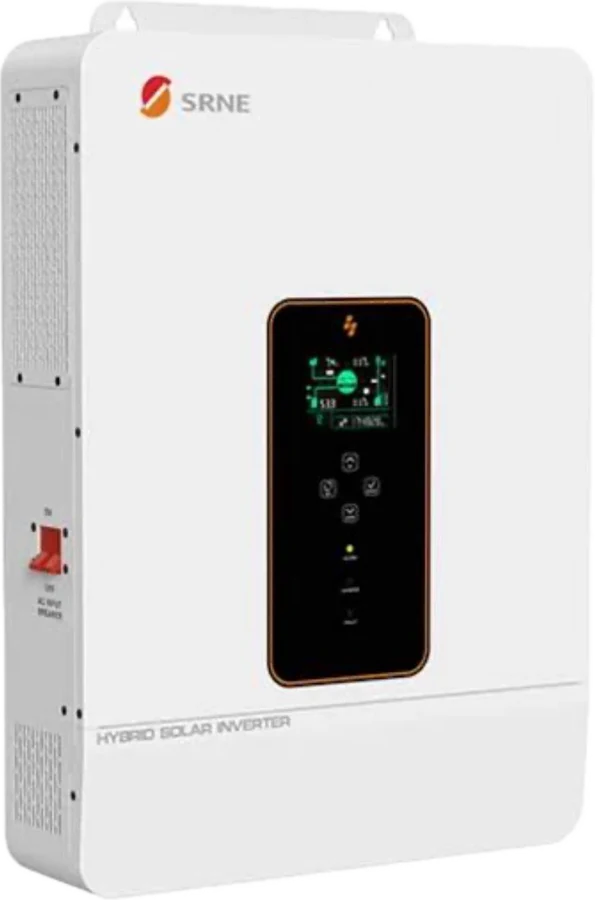
- 5 × SRNE 12kW hybrid
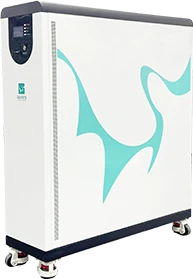
- 120 kWh lithium battery
Add 18 panels and a fifth 30kWh pack later.
Enterprise · Solepower Business 60
60.8 kWp solar · 60 kVA inverter · 150 kWh lithium battery
From ₦47,525,000.00
Choose your configuration below. Confirm current pricing and installation scope in a written quotation.
Equipment overview · exact models confirmed in your quote
Compare equipment and battery capacity. Start with your actual loads and preferred backup hours.
₦47,525,000.00
Add 18 panels and a fifth 30kWh pack later.
₦55,853,000.00
Published package figures are planning references. Confirm current equipment, availability and installation scope. Discuss payment options.
Large school, mall unit or office building running a 50–60kVA generator
Secondary school or campus with several buildings
Mall anchor unit or large showroom
Office building with 60–100 staff
Factory with light daytime production
15–20 units (1.5HP), or a mixed commercial load
Five inverters in parallel share the load.Commercial cold storage around the clock
Full site lighting
All
Workstations, labs, servers and building systems
Multiple pumps
Commercial laundry: yes, within the inverter rating
Commercial kitchen equipment: yes
Three-phase motors. Five inverters cannot be split evenly across three phases; use Business 72 on a three-phase site. Site survey and load audit required.
At a typical night-time load of 15kW (security, servers, cold storage and boarding areas), the 150kWh battery runs for about 9 hours. The cheaper version's 120kWh runs for about 7.2 hours.
Estimates vary with actual load, battery reserve, temperature and conversion losses.SEE THE ENERGY MOVE
Follow solar, battery and generator power through 24 hours. Change the building, weather or configuration to explore how the system responds with the grid off.
Drag to rotate · arrow keys to turn
| Hour | Solar kW | Load kW | Generator kW | Battery % |
|---|
Compare generator fuel for the entire load with the generator backup required in this simulation.
Illustrative model, not live monitoring or a measured weather forecast. The package’s modelled daily solar energy is distributed from 6am to 6pm. Weather multipliers are 125%, 100%, 55% and 25%; they are scenarios, not annual frequency claims. Home demand is weighted towards evenings; business demand towards 8am–6pm, with 35% more daily energy. Adjust daily load from 50% to 200%.
Battery usable capacity is 90% of nominal, starting at 75% of usable capacity at midnight. Charge and discharge efficiency are each 96%. Solar and battery delivery are limited to 90% of inverter kVA in kW. Generator power fills remaining demand, without charging the battery. This is a single illustrative day; its opening and closing battery charge may differ.
Fuel use per hour = 0.25 × supplied kW + 0.037 × generator kVA while running; generator rating is assumed equal to package inverter kVA. Fuel only; servicing, replacement, financing and grid costs are excluded.
| Solar array | 60.8 kWp |
|---|---|
| Panels | 98 × Jinko Tiger Neo 620W N-type TOPCon (Tier-1) |
| Inverter | 5 × SRNE 12kW hybrid |
| Phase | Single-phase |
| Battery storage | 150 kWh |
| Battery chemistry | LiFePO₄ |
| Battery rating | 7-year warranty, over 6,000 cycles at 90% depth of discharge |
| Usable battery capacity | 135 kWh |
| Modelled daily generation | 232.7 kWh |
| Modelled monthly generation | 6981 kWh |
Illustrative scenarios from this package’s existing planning model. Savings and payback are estimates, not guaranteed returns.
conservative
₦2,302,000.00modelled monthly savings2 years estimated payback
base case
₦3,336,000.00modelled monthly savings1.4 years estimated payback
optimistic
₦3,927,000.00modelled monthly savings1.2 years estimated payback
FOLLOW THE RETURN OVER TIME
Adjust the assumptions to see cumulative savings cross the package investment.
Configuration investment: · follows the simulation configuration above.
Simple, undiscounted estimate from the selected package’s savings assumptions. Defaults exclude maintenance until you enter a value. Financing, tariff changes, tax, inflation, replacement batteries and residual value are excluded. The day simulation and this long-term estimate are separate models; one day’s result is not multiplied into an annual guarantee.
Savings are the solar energy a system produces and the customer uses, valued at what that energy costs them today. Output is 1,397kWh per kWp a year, the Lagos figure for a well-oriented, unshaded array after system losses; we count 75% of it as used in homes and 90% in businesses, and give the battery no credit for charging from the grid, so the payback is conservative. Generator fuel is derived rather than assumed: litres/hour ≈ 0.25 × kW drawn + 0.037 × rated kVA, at ₦1,920/litre. The second term is fixed burn proportional to the set's size whether or not anything is plugged in, which is why an oversized generator costs more per kWh than one that is worked hard. Most Lagos generators run at 40–70% of rating; across that band fuel alone costs ₦607–₦702/kWh on a well-maintained engine, about ₦640/kWh at a typical 55% load, and around ₦800/kWh on a worn, lightly loaded one. Servicing, overhaul, managed-power premiums and diesel theft add another ₦60–₦120/kWh, which is what takes generator power past ₦700/kWh all-in. Band A grid is taken at ₦210/kWh. Conservative (₦366/kWh blended avoided cost): Band A home, 14–18 hours of mains, load weighted to the evening. Base case (₦531/kWh): Band B/C small business, roughly 10 hours of mains, mid-life generator. Optimistic (₦625/kWh): Band C/D commercial site with minimal grid and heavy daytime load. The more of your consumption falls in daylight hours, the faster the payback.
Pricing and sizing methodologyA 60kVA generator running 14 hours a day burns roughly 2,950–4,460 litres of diesel a month, depending on how hard it is worked. At ₦1,920 a litre that is ₦5.7M–₦8.6M a month in fuel alone, before servicing, oil changes and the diesel that goes missing. Ask about lease-to-own or Energy as a Service if you would rather not pay up front.
Fuel prices are model assumptions. Check the diesel price guide and request a site-specific comparison.
YOUR SPACE. YOUR POWER NEEDS.
Tell us your location, appliances and backup needs. We’ll help confirm the right configuration and an itemised quotation.
Explore compatible system monitoring